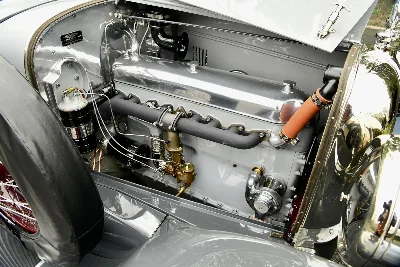
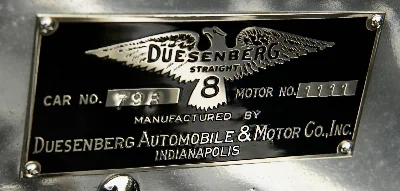
This Duesenberg was nothing short of revolutionary when it was introduced. It became the first serial‑production automobile in America to feature an inline eight‑cylinder engine, proudly promoted in period advertising as the “Eight‑in‑a‑Row.” Drawing heavily on the Duesenberg brothers’ formidable racing experience, the engine displaced 260 cubic inches (approximately 4.3 liters) and incorporated advanced features far ahead of its time, including an overhead camshaft, crossflow combustion chambers, a detachable cylinder head, and a robust output of 88 horsepower.
Beneath the coachwork lies a conventional but expertly engineered ladder‑frame chassis, fitted with a well‑tuned suspension and four‑wheel hydraulic brakes, a first for any production automobile. The braking system utilized finned alloy brake drums to improve heat dissipation, another direct transfer of racing technology to the road. Despite its brilliance, the Model A would later live somewhat in the shadow of its more flamboyant and powerful successor, the Model J, though in its own right it remains an extraordinary achievement.
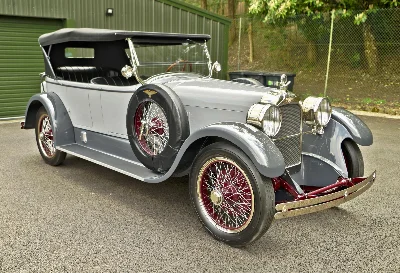
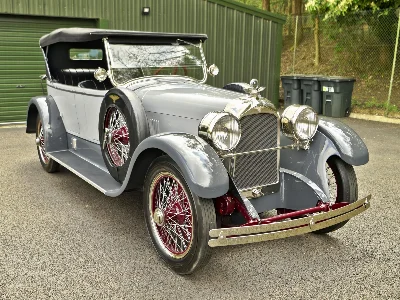
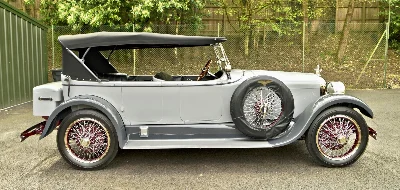
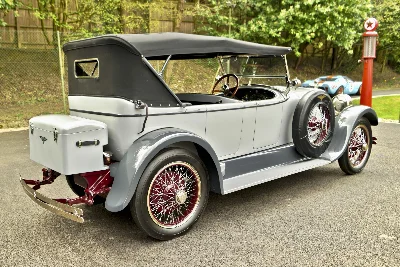
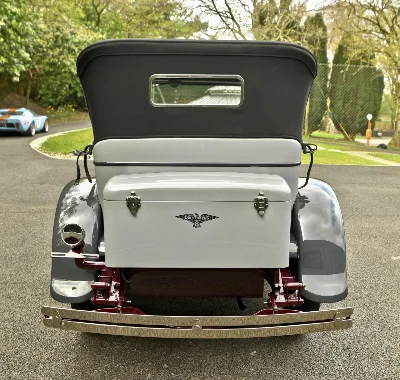
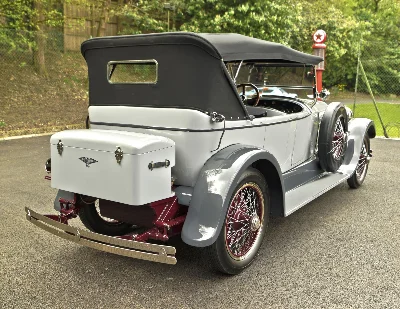
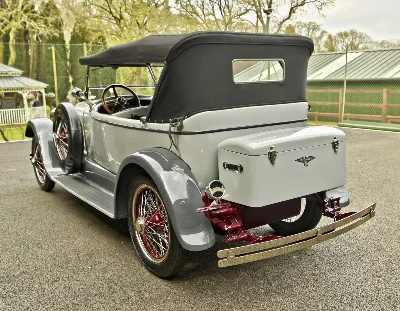
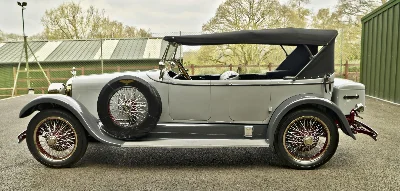
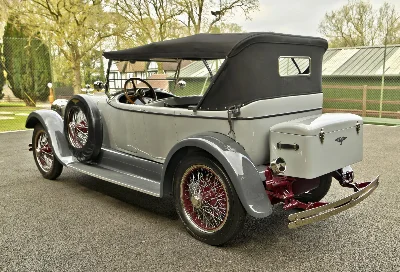
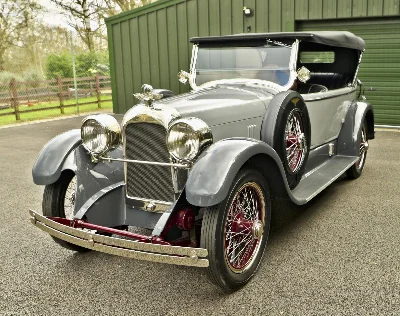
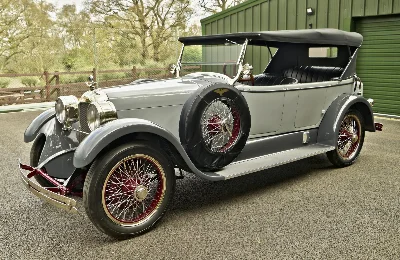
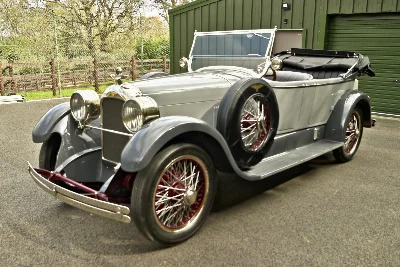
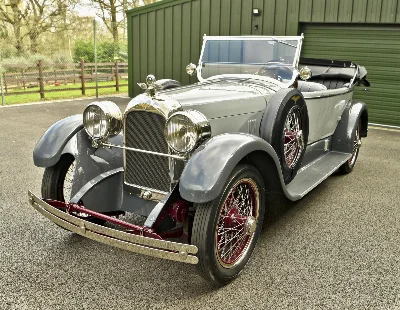
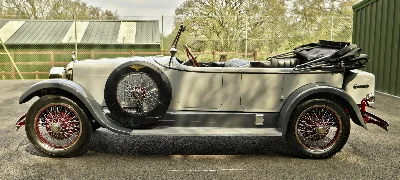
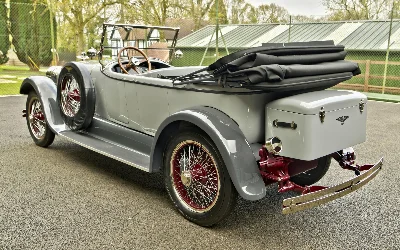
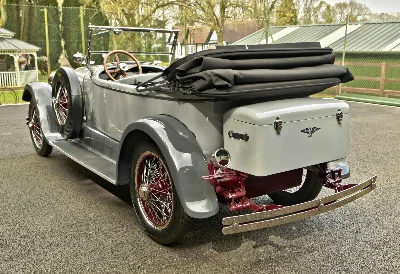
This particular example is fitted with a handsome Sport Phaeton body by Millspaugh & Irish, the Indianapolis‑based coachbuilder responsible for the majority of Model A Duesenberg bodies. Their work is characterized by balanced proportions, restrained detailing, and a sporting elegance that complements the advanced mechanical package.
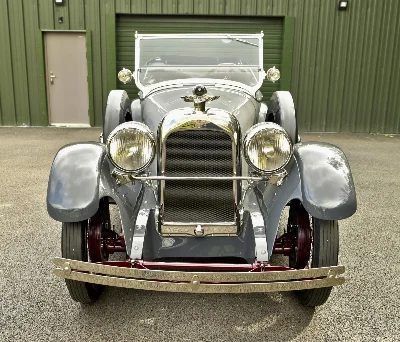
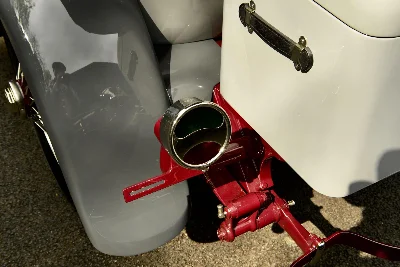
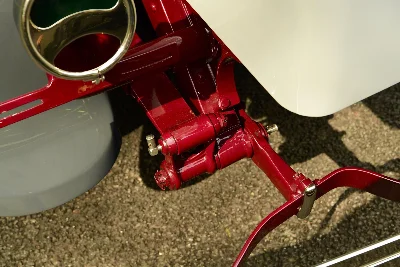
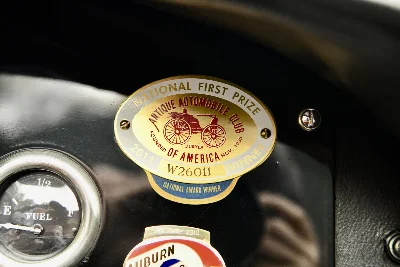
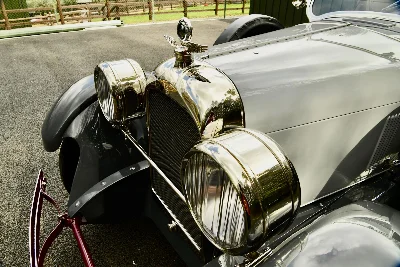
The car’s history has been meticulously researched, and it has been restored to its original specification to the highest standard. Importantly, it has received ACD Category One certification, confirming its authenticity and historical integrity. The presentation is striking yet refined, finished in a tri‑tone color scheme featuring a dove‑gray main body, darker gray fenders, and a deep red chassis and wheels. The result is understated but visually compelling, perfectly suited to the car’s sporting character. Bodywork and paint are executed to concours standards, with exceptional fit, finish, and attention to detail throughout.
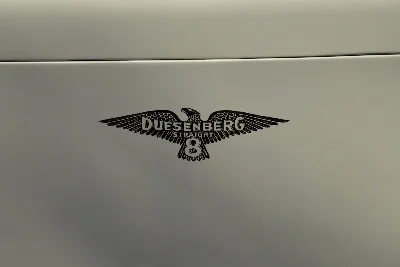
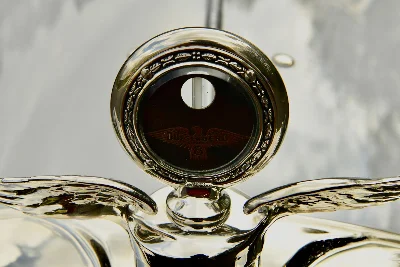
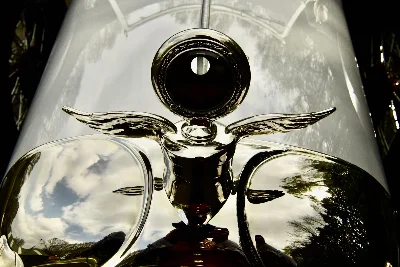
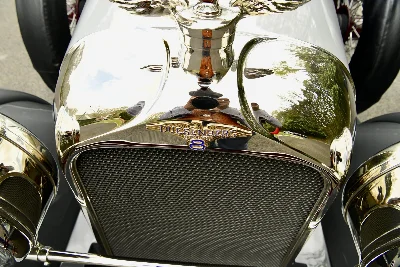
Brightwork is intentionally restrained. The polished nickel radiator is flanked by correct drum‑style headlamps and crowned by a winged, Duesenberg‑branded Moto‑Meter. Dual side‑mounted spares feature upholstered covers and period mirrors, while dual cowl lamps are mounted to the windshield frame. A painted metal trunk is fitted at the rear, and bumpers and other bright trim are finished to a uniformly high standard that complements the car’s elegant aesthetic.
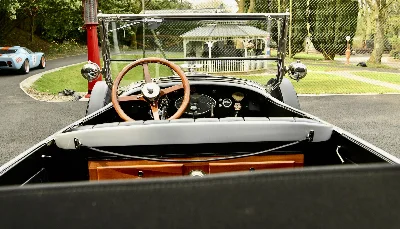
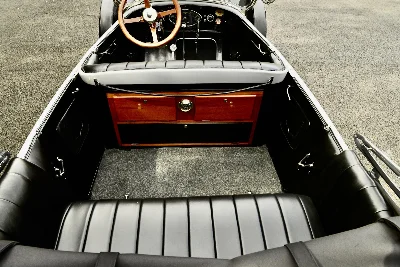
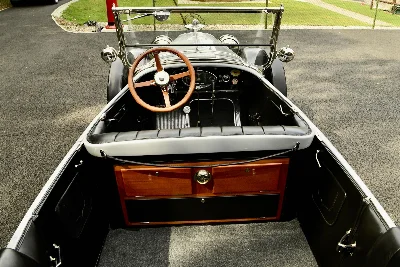
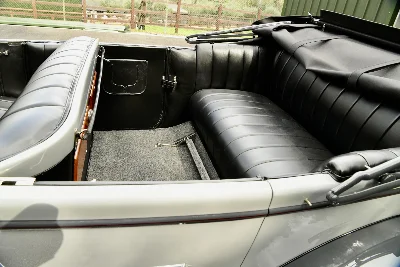
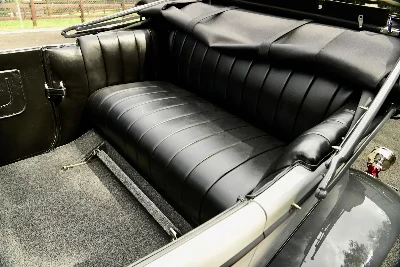
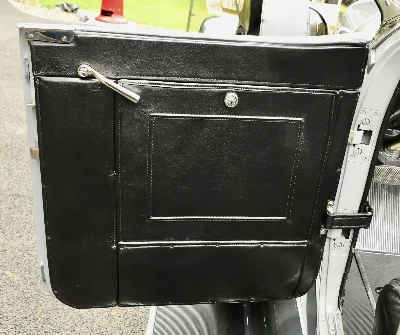
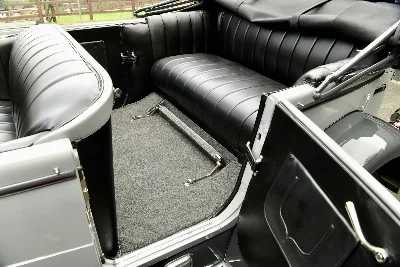
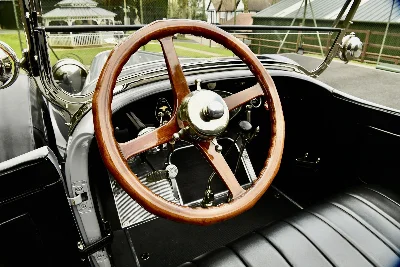
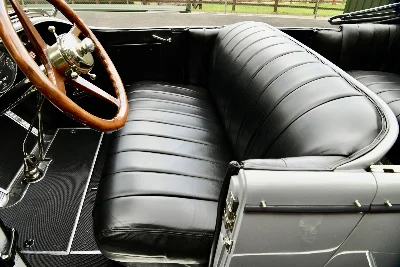
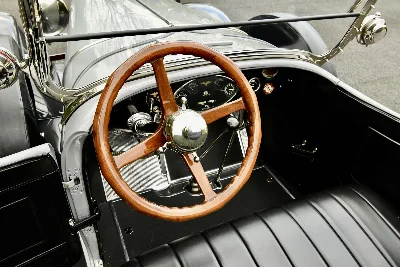
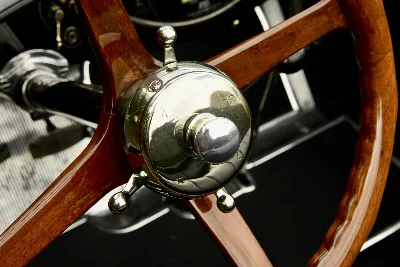
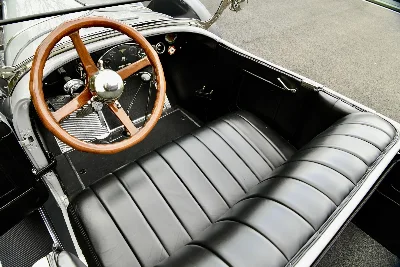
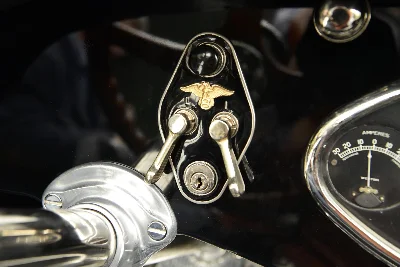
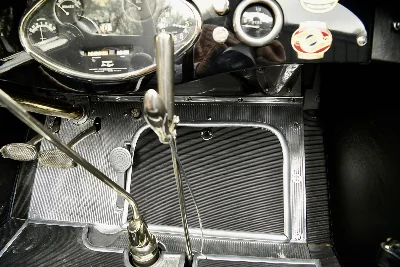
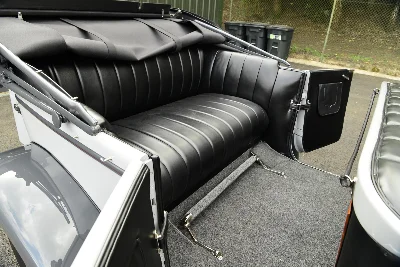
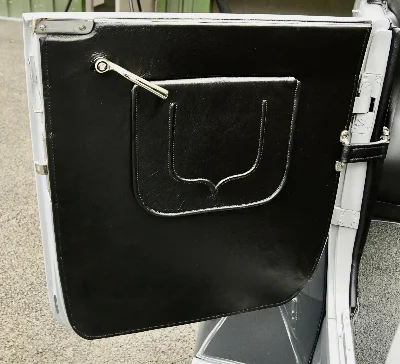
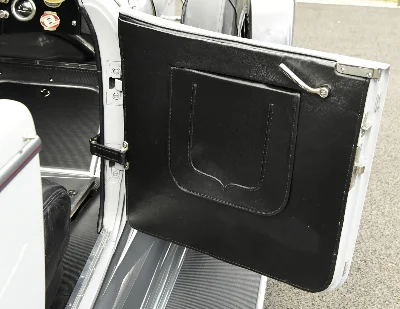
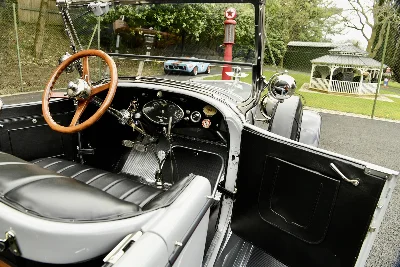
Inside, the cabin is upholstered in black leather, presenting in superb condition with virtually no visible wear since restoration. Door panels feature integrated storage pockets with embossed flaps, while the rear of the front seat incorporates built‑in wooden cabinets, likely intended for items such as lap blankets on cool morning drives. The dashboard is finished in correct black lacquer and fitted with a Duesenberg Eight‑branded Warner De Luxe instrument cluster, while the beautifully restored wooden steering wheel displays a furniture‑grade finish.
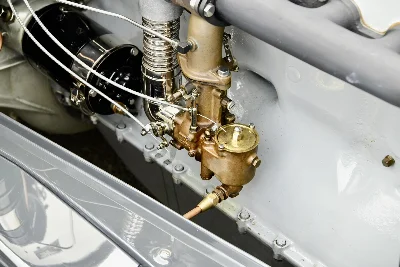
The folding top is trimmed in black canvas, remains taut, and is accompanied by a full set of side curtains. As always with a Duesenberg, however, the true centerpiece is the engine itself. The overhead‑cam straight eight is beautifully presented against the polished alloy firewall, finished in the correct light dove‑gray paint used on early Duesenbergs before the later adoption of the signature bright green. Details such as the polished alloy cam cover, nickel‑plated wiring loom, and meticulously finished ancillaries, including the Robert Bosch horn mounted on the firewall, reflect concours‑level craftsmanship.
Both visually and mechanically, this engine exemplifies early American automotive excellence: a stunning piece of engineering that delivers strong, refined performance while standing as a testament to the Duesenberg brothers’ racing‑bred ingenuity.