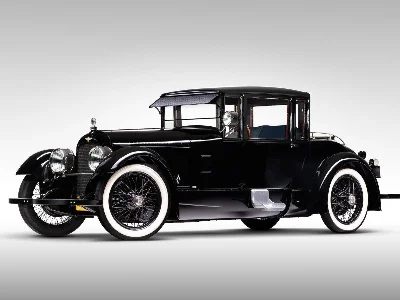
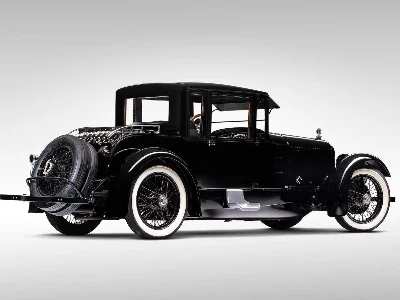
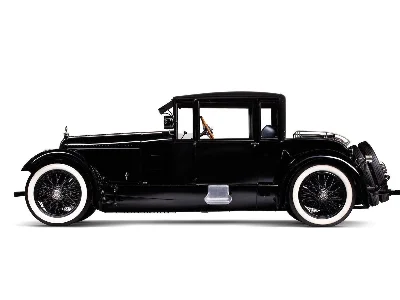
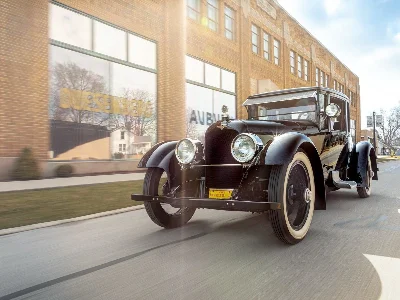
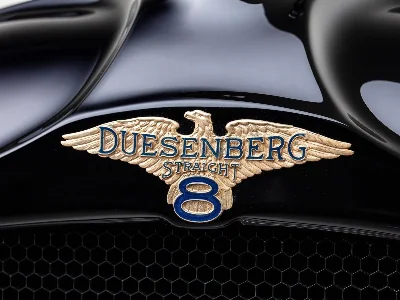
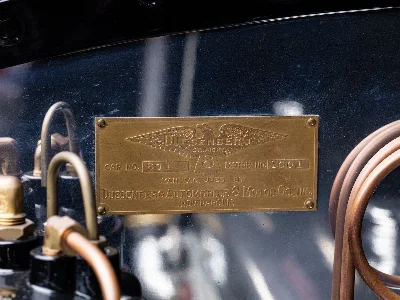
This remarkable 1921 Duesenberg Model A, serial number 601, occupies a unique and irreplaceable position in automotive history. Delivered new to Samuel Northrup Castle of Hawaii, it is recognized as the first customer-purchased production passenger car built by the Duesenberg brothers, making it the starting point of the legendary Duesenberg passenger-car lineage.
Often referred to as “Duesenberg #1,” the car marks the transition of Fred and August Duesenberg from world-class racing engineers to manufacturers of what would become America's most prestigious automobiles.
The Birth of a Legend
By 1919, the Duesenberg name was already synonymous with innovation and performance. German-born brothers Frederick and August Duesenberg had built a formidable reputation through their work on racing cars, motorcycles, marine engines, and aircraft engines during the First World War.
Seeking to enter the luxury automobile market, they established Duesenberg Automobile and Motors Company, Inc. in Indianapolis. After several prototypes and development cars, production began in 1921 with the introduction of the Straight Eight, later known as the Model A.
Originally intended to be powered by a conventional engine, the Duesenberg brothers made a bold last-minute decision to equip their passenger cars with a sophisticated racing-derived powerplant. Although this delayed production and strained the company's finances, it created one of the most technologically advanced automobiles in the world.
A contemporary Los Angeles Times headline proclaimed:
“Duesenberg Eight Here: Products of Famous Motor Builder Reach Los Angeles and Beat Expectations by Several Miles.”
The Model A became the first American production passenger car equipped with an overhead-camshaft inline-eight engine, a feature derived directly from contemporary racing practice.
The First Customer Car
Samuel Northrup Castle, a prominent Hawaiian businessman and founder of Castle & Cooke Company, had placed his order as early as 1919. When delivery finally occurred in 1921, he became the first customer to take possession of a production Duesenberg passenger automobile.
As was customary for luxury automobiles of the era, Duesenberg supplied only the chassis and engine. Independent coachbuilders then created bodies according to the owner's wishes.
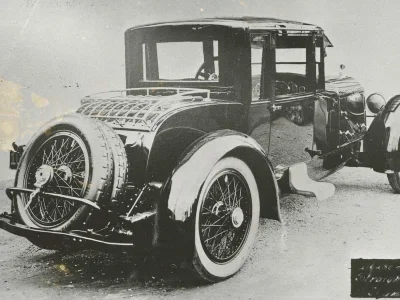
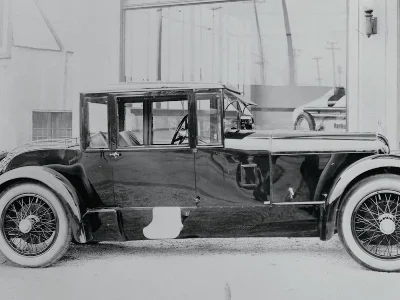
For Castle, the commission went to the Bender Body Company of Cleveland, Ohio, which constructed a unique coupe body unlike any other Duesenberg.
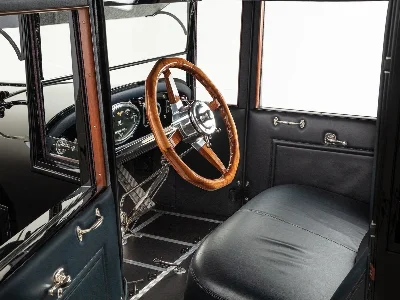
The reason was simple: Castle stood approximately seven feet tall. To accommodate his unusual stature, the coachwork featured an exceptionally spacious interior with generous headroom and legroom. Despite its large cabin, the body displayed a remarkably sporting appearance.
Distinctive features included:
- Unique custom-built Bender coupe body
- Cycle-style fenders
- No running boards
- Full-length aluminum belly pans
- Extremely spacious passenger compartment
- Sporting proportions unusual for a luxury coupe
The result was an automobile simultaneously luxurious, practical, and unmistakably athletic.
Engineering Decades Ahead of Its Time
Fred Duesenberg famously declared that his automobiles would:
“Outclass, outrun, and outlast any car on the road.”
The Model A embodied that philosophy.
Power came from a revolutionary:
- 260-cubic-inch single overhead camshaft inline eight
- 88 horsepower
- Hemispherical combustion chambers
- Single-barrel updraft carburetor
These specifications were extraordinary in 1921 and placed the Duesenberg among the most advanced automobiles in the world.
Even more innovative were its brakes. The Model A became the first American passenger car equipped with four-wheel hydraulic brakes, introduced years before they became industry standard. At a time when many automobiles lacked front brakes entirely, the Duesenberg could stop more safely and effectively than virtually any competitor.
Additional competition-inspired features included:
- Full-length aluminum belly pans
- Exhaust cut-out system
- Lightweight construction utilizing aluminum components
Contemporary advertisements boasted that the car could be brought to a complete stop from 30 mph in approximately one car length.
The combination of advanced engineering and relatively light weight gave the Castle Duesenberg a top speed well in excess of 100 mph, an astonishing figure for the early 1920s.
Life in Hawaii
Castle extensively used the Duesenberg following its arrival in Hawaii. So much so, in fact, that he eventually sent it back to Indianapolis, where the Duesenberg factory refreshed and updated the automobile during the late 1920s.
The updates included:
- A Model J steering wheel
- Modernized lighting equipment
- Rear luggage rack
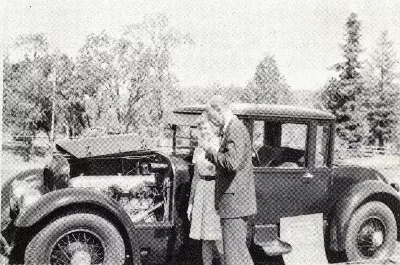
After returning to Hawaii, the car continued to serve as regular transportation. Unlike many historically significant automobiles, it was not preserved as a museum piece. Castle drove it extensively and even used it to inspect plantations and perform farm-related duties.
When he died in 1959, his obituary fondly recalled his affection for automobiles:
“He drove old cars which he kept in tip-top mechanical shape... his black 1921 Duesenberg was in active use until a few years ago.”
Four Generations of Ownership
One of the most extraordinary aspects of chassis 601 is its continuous connection to the Castle family.
Following Samuel Castle's death, ownership passed to his nephew, James C. Castle, and later to James C. Castle Jr. and CyrAnn Castle.
Through four generations of ownership, the car remained in the family and became:
- The only known Duesenberg that remained in the family of its original owner.
- Apart from an appearance at the Napa Valley Concours in 1968, the car spent much of the second half of the twentieth century in storage, protected but largely unseen.
The Canepa Restoration
By 2010, nearly a century of use and storage had taken its toll. The Castle family commissioned renowned restorer Bruce Canepa of Scotts Valley, California, to return the automobile to its original 1921 specification.
The restoration proved monumental.
Over approximately 10,000 hours of work and three years, Canepa's team meticulously researched, restored, and preserved every aspect of the unique coupe. Particular attention was paid to reversing later modifications and faithfully recreating the car as it would have appeared when Samuel Castle first received it.
The finished automobile debuted at the 2013 Pebble Beach Concours d'Elegance, where it immediately attracted widespread admiration.
Concours Recognition
Following restoration, the Model A achieved significant accolades, including:
- Classic Car Club of America Trophy, Pebble Beach Concours d'Elegance
- Best of Show, Niello Concours at Serrano
- Automotive Heritage Award, Amelia Island Concours d'Elegance
These honors recognized not only the quality of the restoration but also the extraordinary historical importance of the automobile itself.
Donation to the Auburn Cord Duesenberg Automobile Museum
As the centennial of Duesenberg approached, the Castle family sought a permanent home where the car's significance could be appreciated by future generations.
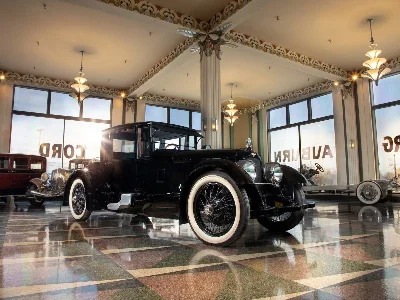
On December 30, 2019, serial number 601 was donated to the Auburn Cord Duesenberg Automobile Museum in Auburn, Indiana.
The location was particularly fitting. The museum occupies the original headquarters building of the Auburn Automobile Company, whose president E.L. Cord acquired Duesenberg in 1926 and guided the marque into its most celebrated era.
Specifications
Serial Number: 601
Engine Number: 1001
Model: Duesenberg Model A (Straight Eight)
Coachbuilder: Bender Body Company, Cleveland, Ohio
Body Style: Coupe
Engine: SOHC Inline Eight
Displacement: 260 cubic inches
Horsepower: 88 hp
Carburetion: Single-barrel updraft carburetor
Transmission: 3-speed sliding-gear manual
Brakes: Four-wheel hydraulic drum brakes
Wheels: 23-inch steel wire wheels with knock-off hubs
Tires: 33 × 5 Universal bias-ply
Exterior Color: Black
Interior Color: Dark Blue Leather
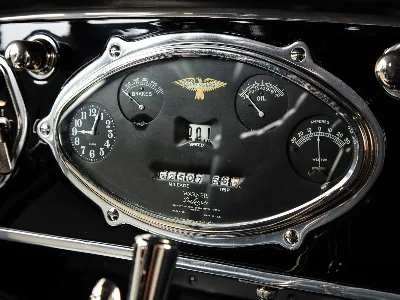
Mileage Displayed: 32,507 miles
Long before the Model J became America's greatest luxury automobile, serial number 601 established the foundation upon which the Duesenberg legend would be built. Combining groundbreaking engineering, racing-derived technology, and bespoke craftsmanship, it demonstrated everything Fred and August Duesenberg believed an automobile should be.
As the first customer-owned Duesenberg, the only example to remain within its original family for four generations, and one of the most historically important American automobiles in existence, Duesenberg 601 stands as the beginning of one of the most celebrated stories in automotive history.