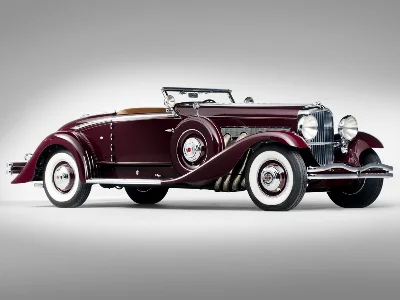
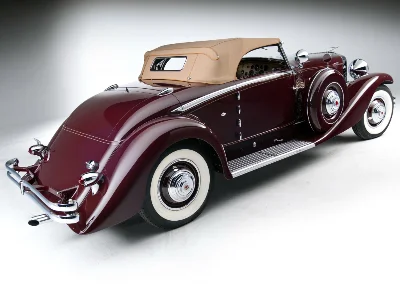
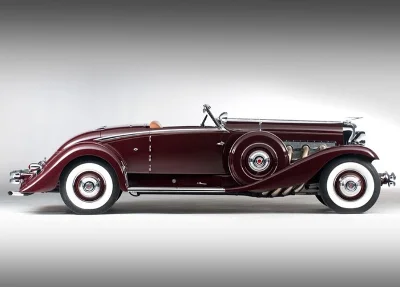
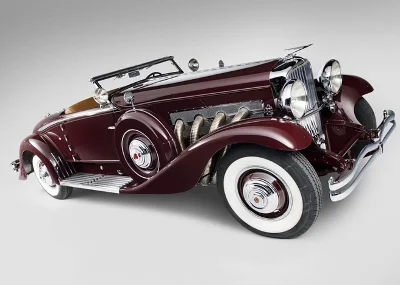
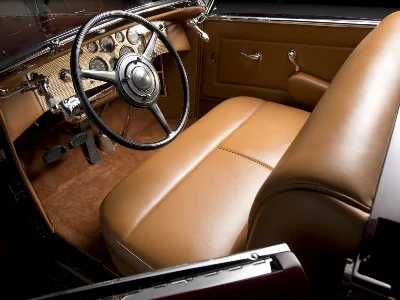
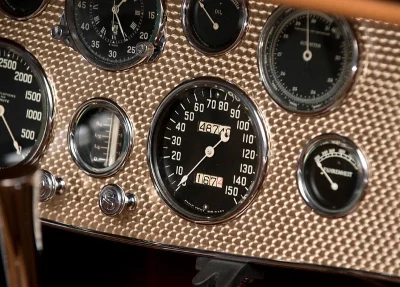
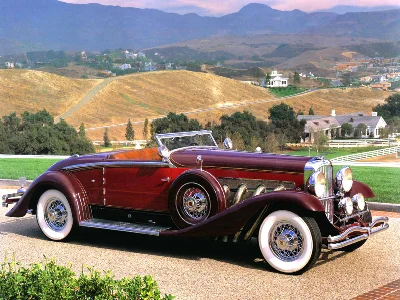
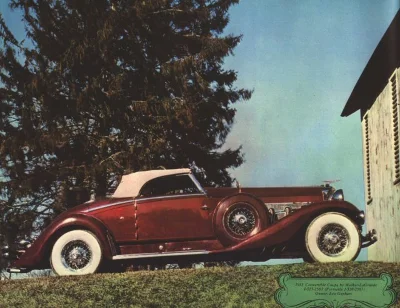
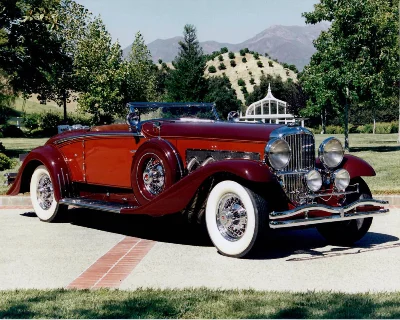
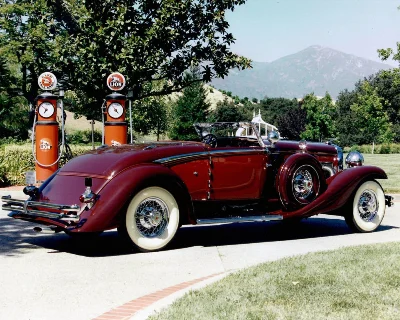
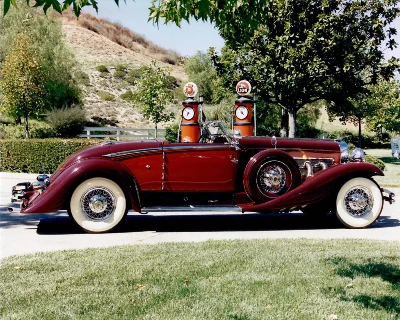
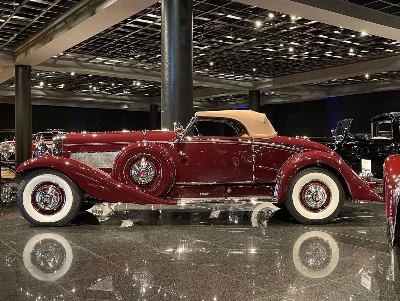
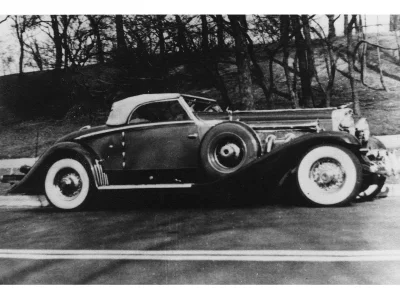
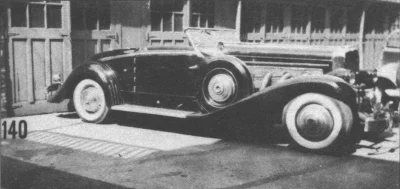
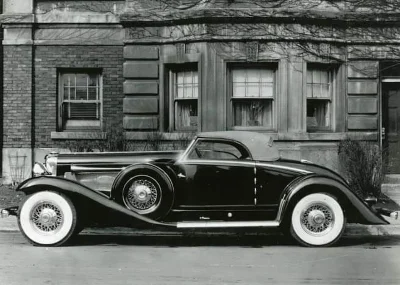
Among the final and most advanced expressions of the Duesenberg Model J was chassis 2563, a rare Walker-LaGrande Convertible Coupe powered by a factory-supercharged SJ engine. Combining cutting-edge styling, exceptional performance, and extreme rarity, this automobile represents Duesenberg's effort to modernize the Model J during the closing years of production.
By the mid-1930s, the Model J's original styling was beginning to show its late-1920s origins. To address this, Duesenberg designer J. Herbert Newport, who succeeded Gordon Buehrig as the company's chief stylist, developed a series of more contemporary body designs. The Walker-LaGrande Convertible Coupe was among Newport's most successful creations.
Its styling incorporated many of the latest automotive trends, including:
- Smaller 17-inch wheels
- Attractive skirted fenders
- Rounded, streamlined body contours
- A graceful curved beltline
- Tasteful chrome moldings emphasizing the car's length and elegance
The result was a far more modern appearance while retaining the imposing presence expected of a Duesenberg.
One of the body's most innovative features was its "semi-automatic" disappearing top. Using a crank handle inserted into a socket on the side of the body, the owner could easily operate the mechanism, allowing the roof to fold completely beneath a flush-fitting rear deck lid. The arrangement was comparable to the disappearing tops found on contemporary Mercedes-Benz Special Roadsters and remains one of the most sophisticated convertible systems of the period.
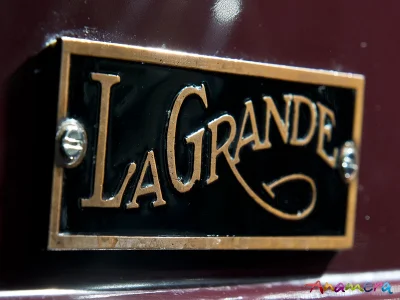
Production of this striking body style was handled by the A.H. Walker Body Company of Indianapolis, one of several firms that built bodies for Duesenberg under the prestigious LaGrande name. Due to the continuing effects of the Great Depression and the declining market for ultra-luxury automobiles, only three Walker-LaGrande Convertible Coupes were ever produced.
Of those three, chassis 2563 was unique. It was the only example built with a factory-supercharged SJ engine, making it the most powerful and desirable of the trio. The combination of modern styling and SJ performance made chassis 2563 one of the ultimate Duesenbergs.
The car was originally purchased by John Nichols, a Chicago banker and repeat Duesenberg owner.
Nichols was evidently impressed by the new design and increased performance, trading in his earlier Murphy Convertible Coupe (chassis 2475/J‑405) in favor of the new Walker-LaGrande SJ.
He retained the car for only two years before trading it in during February 1937 through South Shore Buick of Chicago. At the time, the odometer showed an impressive 50,899 miles, indicating that the car had been extensively enjoyed rather than merely displayed.
Following Nichols' ownership, the Duesenberg remained largely within the Chicago area for many years, changing hands through various dealerships and enthusiasts.
Among its notable custodians was legendary Duesenberg dealer and collector John Troka, one of the most influential figures in preserving the marque during the mid-20th century.
In 1940, the car was involved in an accident serious enough to require replacement of the original frame. The damaged chassis was replaced with the unit from chassis 2405, which remains under the car today.
At some point during its history, the original bellhousing carrying engine number J‑530 was replaced by one numbered J‑515, creating some confusion regarding the engine's identity. Importantly, however, the original supercharged engine itself remained with the car, preserving its authenticity despite the renumbering.
In 1970, ownership passed to Harold Orchard, who embarked on a comprehensive restoration of the Duesenberg.
Following restoration, the car continued to pass through the hands of discerning collectors before eventually joining the collection of General William Lyon, one of America's most respected collectors of classic automobiles. Under Lyon's stewardship, the car became widely recognized as one of the finest surviving examples of the Walker-LaGrande Convertible Coupe.
Following its restoration, chassis 2563 achieved significant concours recognition, including:
- First in Class, Pebble Beach Concours d'Elegance (1998)
This award confirmed its status as one of the most important and best-restored late-production Duesenbergs.
Duesenberg 2563 represents the culmination of the Model J's evolution. Its streamlined Newport styling, innovative disappearing top, and factory-supercharged performance combined to create one of the most sophisticated American automobiles of the 1930s.
As the sole SJ among the three Walker-LaGrande Convertible Coupes, it stands today as one of the rarest, most desirable, and most historically significant Duesenbergs ever built.