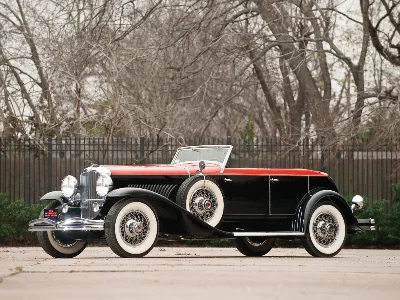
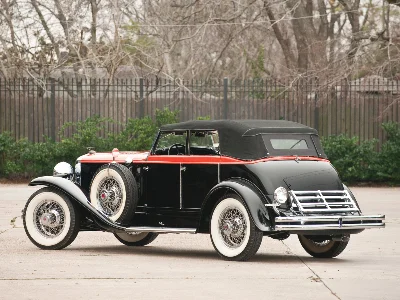
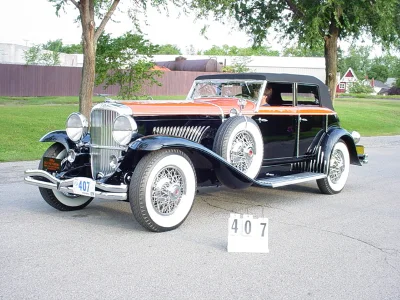
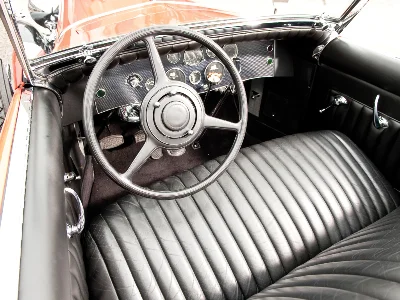
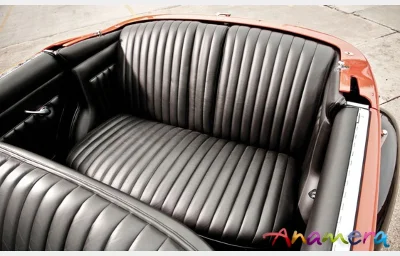
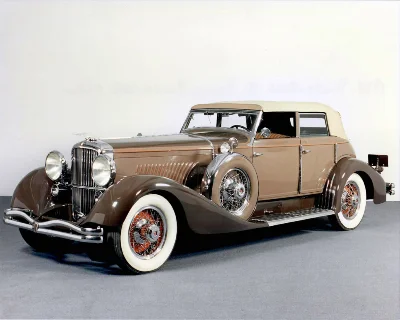
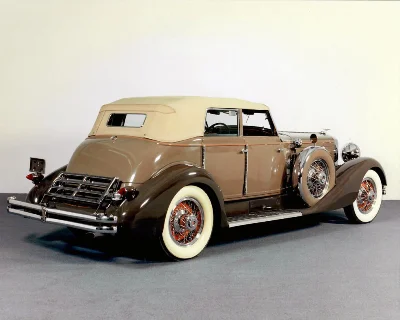
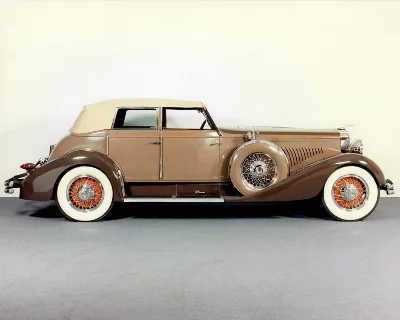
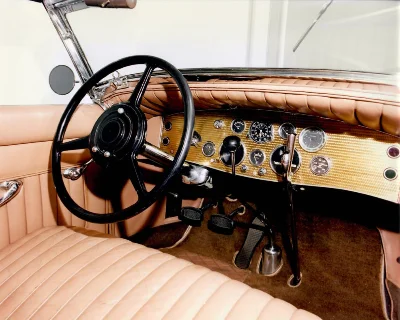
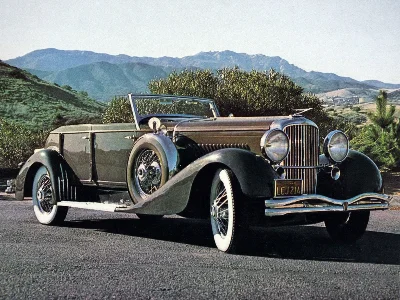
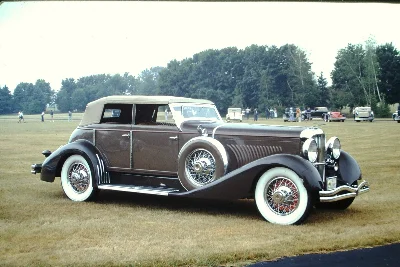
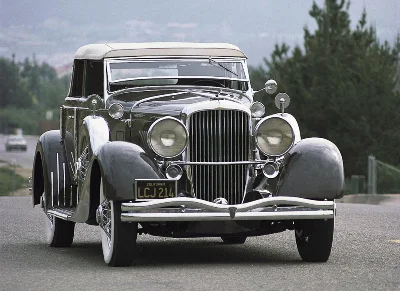
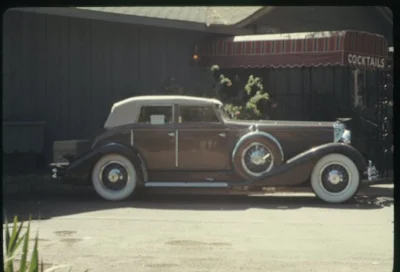
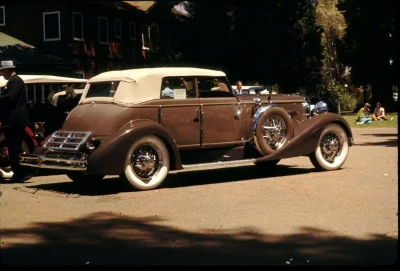
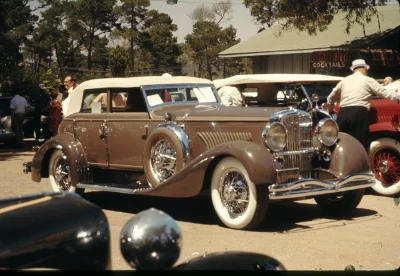
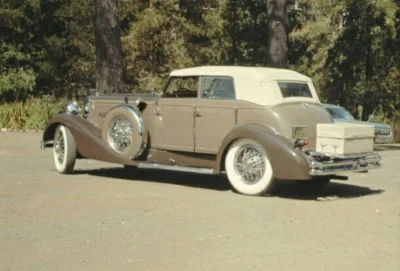
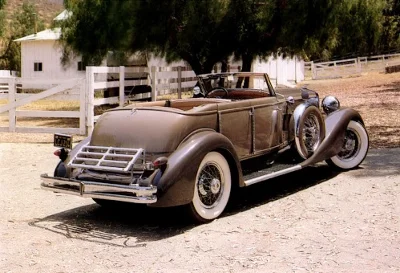
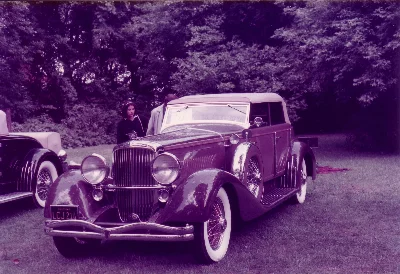
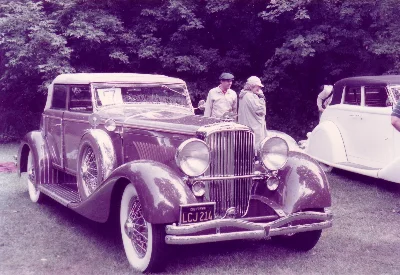
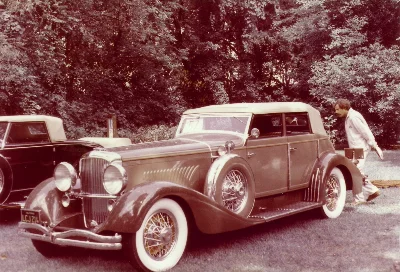
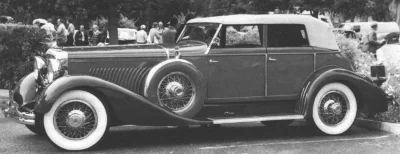
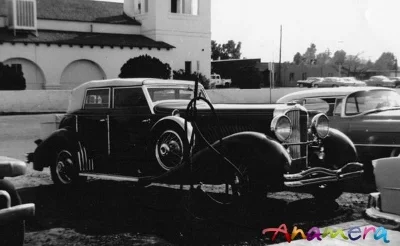
Duesenberg Model J chassis 2550 is one of the most distinctive and innovative open-bodied Duesenbergs ever constructed. Fitted with the rare Riviera Phaeton body by Brunn & Co., it is one of only three examples built in this style and showcases some of the most advanced coachbuilding features of the Classic Era.
The Buffalo, New York coachbuilder Brunn & Company created the Riviera Phaeton as a luxurious sporting convertible that combined elegant styling with ingenious engineering. Its most remarkable feature was an elaborate disappearing-top mechanism, allowing the folded convertible roof to be completely concealed beneath a special compartment behind the rear seats. While disappearing tops were occasionally seen on two-door convertibles, such a system was exceptionally rare on a large four-door phaeton. Another distinctive Brunn hallmark was the use of elegant full-length piano-hinged doors, which emphasized the car's craftsmanship and gave the body a clean, uninterrupted appearance.
The Riviera Phaeton body was originally mounted on chassis 2550 and fitted with engine J‑521. Of the three Riviera Phaetons constructed, this example was unique because it was the only one not originally equipped with a supercharger. While the other examples were built to SJ specification, chassis 2550 retained the standard Model J powerplant.
In 1945, owner Ted Hallerberg of Illinois undertook a significant modification. The Riviera Phaeton body was removed from its original chassis, 2550, and installed on chassis 2448, which carried engine J‑440.
As a result of this transfer:
- The original body of 2550 no longer remained on its factory chassis.
- Engine J‑521 was eventually replaced by J‑440.
- The Riviera Phaeton became associated with both chassis 2550 and 2448 during its complex history.
Such body and chassis exchanges were not uncommon during the mid‑20th century, when preservation of rare coachwork often took precedence over maintaining original chassis-body combinations.
During the 1930s, the car was also restyled by Bohman & Schwartz, one of California's most respected coachbuilders. Their modifications reflected contemporary styling trends and altered some of the original Brunn details.
A major chapter in the car's preservation began in 2006, when owner J. Peter Ministrelli of Michigan commissioned a concours-level restoration.
The work was entrusted to renowned Duesenberg specialists Brian Joseph and Fran Roxas, both highly respected for their expertise in restoring significant Classic Era automobiles. Their goal was to return the Riviera Phaeton as closely as possible to its original 1934 appearance, reversing later modifications and carefully recreating lost details. The completed restoration successfully restored the elegance and innovation that made the Riviera Phaeton one of Brunn's most remarkable creations.
The Brunn Riviera Phaeton represents one of the most sophisticated body styles ever mounted on a Duesenberg chassis. Combining innovative engineering, dramatic styling, and extraordinary rarity, chassis 2550 occupies a unique place in Duesenberg history.
Its disappearing top, elegant proportions, and complex history of modifications and restoration make it one of the most fascinating and desirable surviving examples of the "World's Mightiest Motor Car."