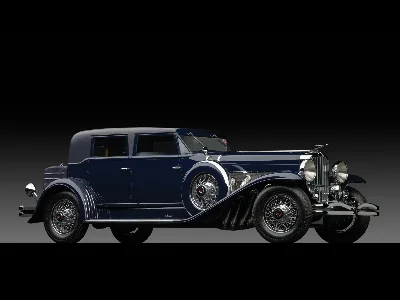
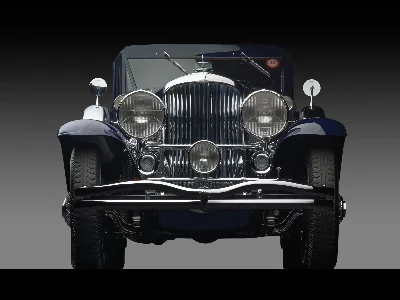
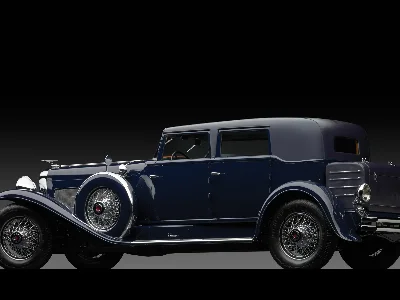
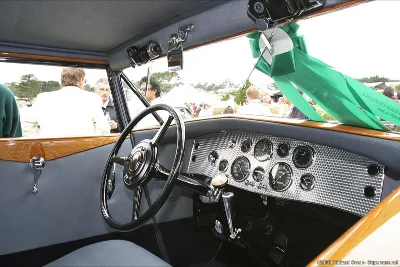
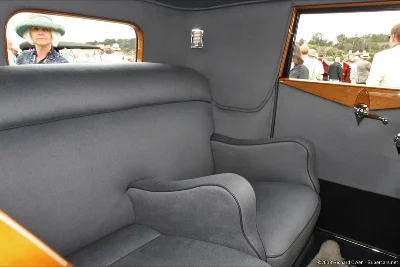
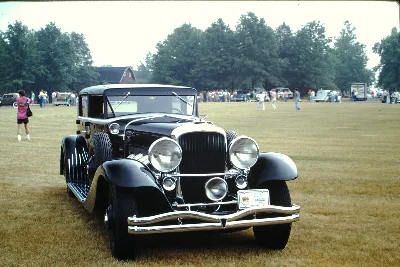
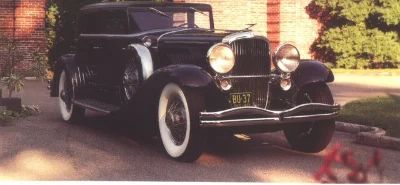
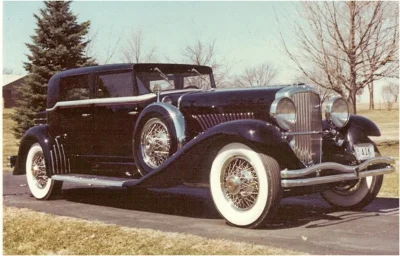
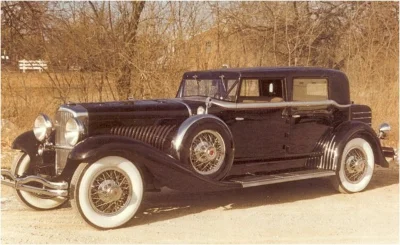
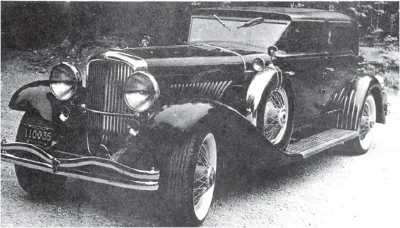
Few closed-body Duesenbergs combine design significance, rarity, performance, and concours pedigree as completely as chassis 2538, the only factory-supercharged SJ Beverly Sedan ever built. Widely regarded as one of Gordon Buehrig’s masterpieces, this remarkable automobile represents the ultimate development of the celebrated Beverly design and is often considered among the most beautiful closed Duesenbergs in existence.
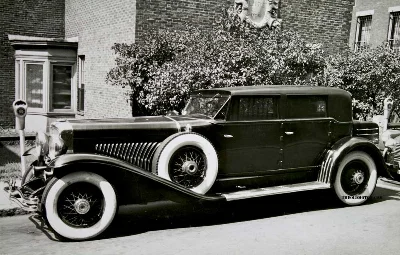
Among the many bodies designed by Gordon M. Buehrig during his tenure as Duesenberg’s chief body stylist, few were more important than the Beverly Sedan. First introduced at the 1930 Chicago Auto Salon, the Beverly was intended to be a modern formal automobile suitable for both owner-drivers and chauffeur service.
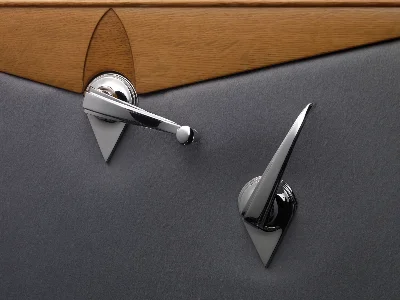
Buehrig sought to reduce the visual weight traditionally associated with luxury sedans. To achieve this, he incorporated several distinctive features:
- A dramatically raked windshield
- Small triangular side windows framing the windshield
- A distinctive V-shaped roof dip between the side windows
- Compact, close-coupled proportions
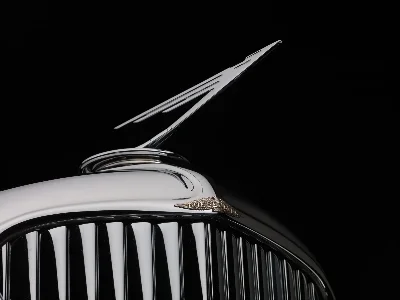
- Subtle aircraft-inspired design influences
The result was a sedan that appeared lighter, lower, and more modern than its contemporaries.
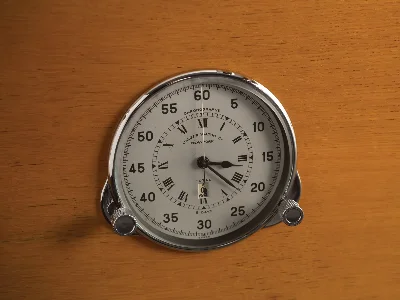
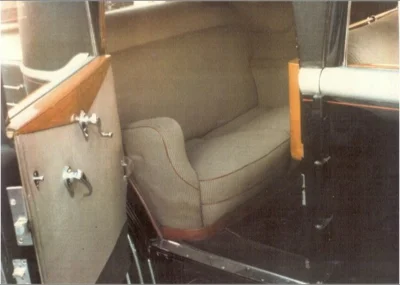
The interior was equally innovative. Buehrig designed the rear compartment around two individual armchair-style seats separated by a fixed center armrest. A cabinet behind the front seat contained a radio, glove compartment, and rear-seat instrumentation.
As Buehrig later explained:
“Since the Duesenberg Model J was the only American car capable of 100 miles per hour, I reasoned the rear-seat passenger would enjoy a speedometer.”
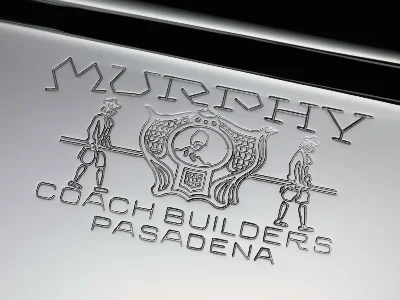
Only ten Beverly Sedans were ever built, eight by Murphy and two by Rollston, and no two were exactly alike.
Body number 978 was the second Murphy-built Beverly produced, following directly after the original Chicago show car.
It was commissioned by G. E. Crandall, an executive of Montgomery Ward and a resident of Chicago’s prestigious Gold Coast district. Having likely admired the original Beverly at the Chicago Auto Salon, Crandall ordered a nearly identical example for himself. Crandall retained the car for less than two years before returning it to the Duesenberg branch in Chicago.
In 1933, industrialist Powel Crosley Jr., famed for his radios, refrigerators, and later compact automobiles, ordered a new Duesenberg equipped with the newly available SJ supercharged engine.
By this point, the Murphy company had ceased operations. Rather than create an entirely new Beverly body, Duesenberg transferred Crandall’s Beverly coachwork onto a brand-new SJ chassis, number 2538, powered by engine J‑512.
Before installation, the body was updated to reflect contemporary styling trends, including:
- New wheels
- Fender skirts
- Various refinements to exterior trim
This configuration became:
- The only Beverly ever installed on an SJ chassis
- The final Beverly delivered to a customer
- The only Beverly built without a division window
The absence of a divider suggests that Crosley intended to drive the car himself, a fitting choice for a businessman known for his energetic and hands-on personality.
Crosley enjoyed the car for approximately five years. Thereafter it spent several decades circulating among owners in the Midwest.
Among its notable caretakers was Edward Bonham, an early collector with extraordinary foresight, whose garage housed other significant classics including another Duesenberg and a 1934 Packard LeBaron Sport Phaeton.
Following Bonham’s untimely death, the car passed to Fred Benson, a dedicated Auburn Cord Duesenberg Club member. Discovering that the SJ had been dormant since the 1950s, Benson returned it to running condition and actively drove it at club events.
In a 1971 club newsletter, Benson enthusiastically noted:
“OH BOY does it run!”
Subsequent owners included:
- James Packer
- Dave Deuble
- Minnesota collector Andrew Darling
- Lee Herrington
During Lee Herrington’s ownership, plans were made for a complete restoration. One crucial challenge remained: at some point in its life, the original supercharger had been removed.
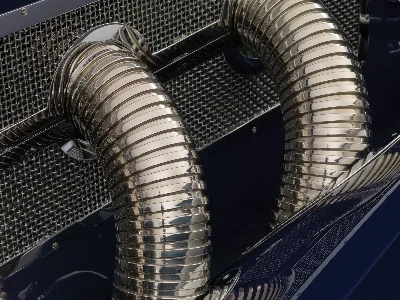
Although reproduction units were available, Herrington was determined to locate an authentic original Duesenberg supercharger, one of only 36 factory-produced units. After a lengthy and costly search, he succeeded in acquiring a genuine original blower. This achievement proved vital to the car’s future authenticity.
In 2006, the car and its original supercharger were acquired by a prominent collector and entrusted to RM Auto Restoration in Ontario, Canada.
The restoration was exhaustive:
- Complete disassembly to the last nut and bolt
- Mechanical rebuilding throughout
- Refurbishment of all original components where possible
- Restoration of the wood framework, which was found largely intact
- Reinstallation of the authentic factory supercharger
- Recreation of the original upholstery patterns and interior finishes
During the work, evidence of the Beverly’s original center armrest was discovered beneath later upholstery. This long-lost feature was faithfully recreated and returned to the car.
The fenders were restored to their original open configuration and proper chrome wire wheels were installed.
Following restoration, chassis 2538 became one of the most successful Duesenbergs on the concours circuit.
Awards include:
- Best of Show, ACD Club National Reunion (2008)
- Best in Class, Pebble Beach Concours d’Elegance (2008)
- Best of Show, Fairfield County Concours d’Elegance (2009)
- Best in Class, Amelia Island Concours d’Elegance (2010)
- Best of Show, Glenmoor Gathering of Significant Automobiles (2010)
The Beverly Sedan was Gordon Buehrig’s vision of the perfect modern luxury car. Chassis 2538 represents the ultimate expression of that vision—combining the elegance of the Beverly design with the extraordinary performance of a factory-supercharged SJ.
With its unique status, impeccable restoration, original supercharger, and unparalleled concours record, it stands not only as the finest Beverly ever built, but as a strong contender for the title of the most beautiful closed-body Duesenberg in existence.