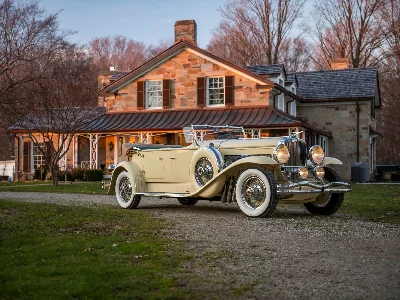
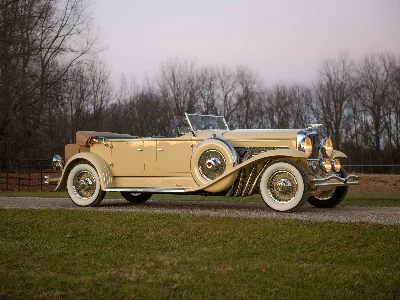
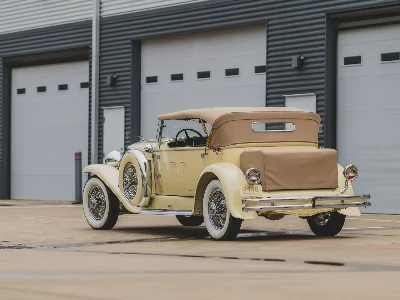
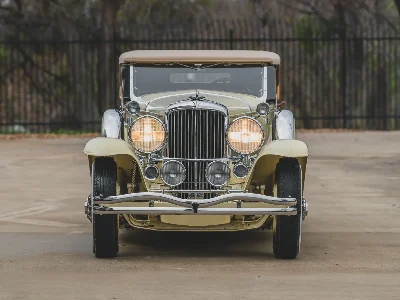
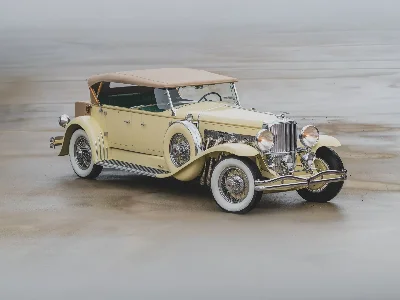
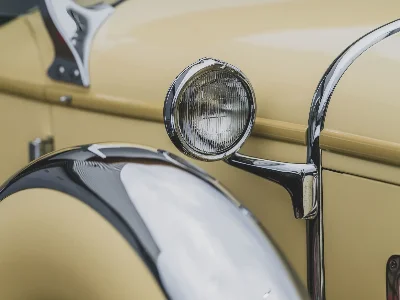
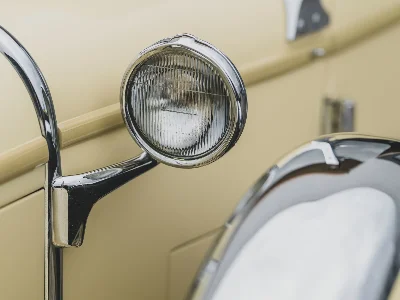
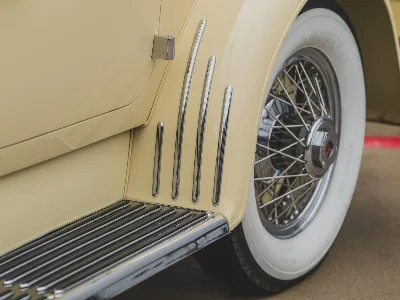
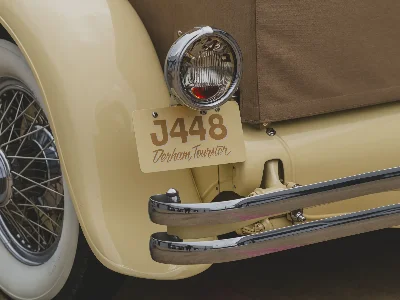
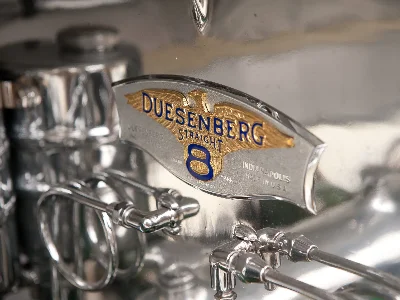
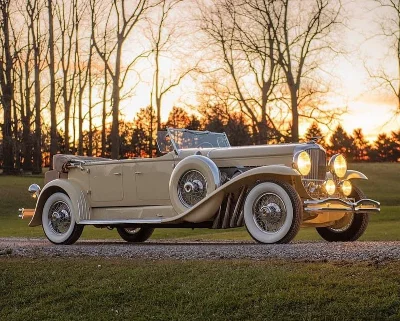
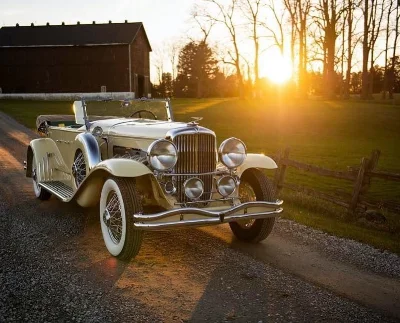
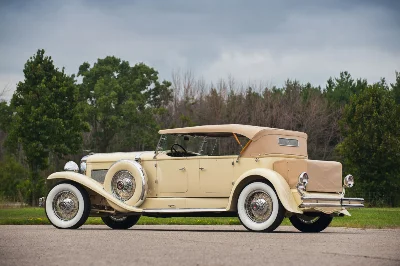
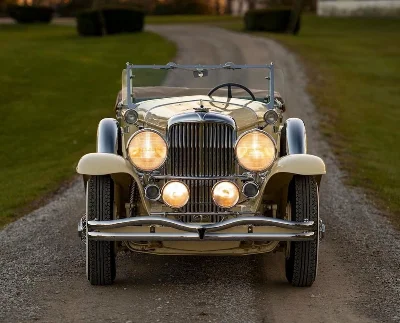
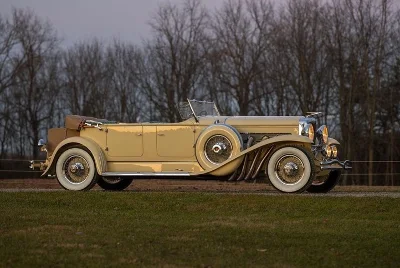
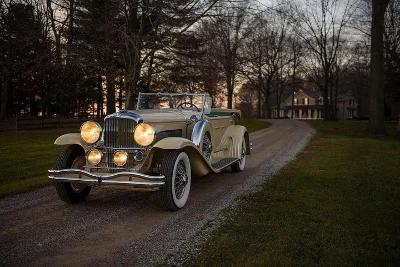
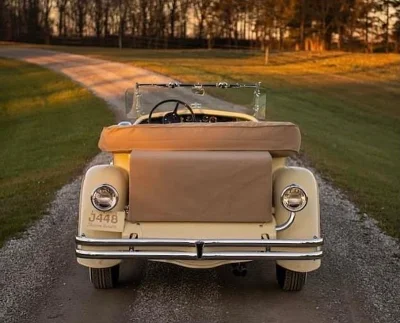
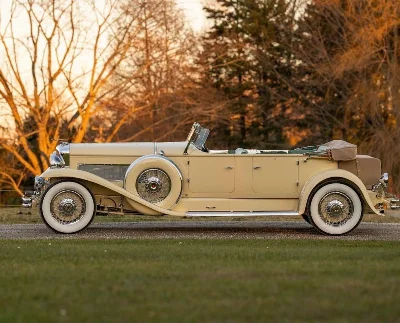
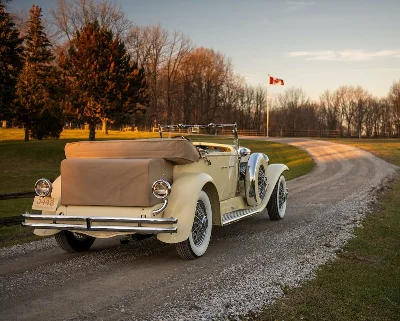
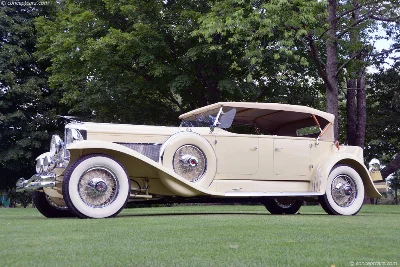
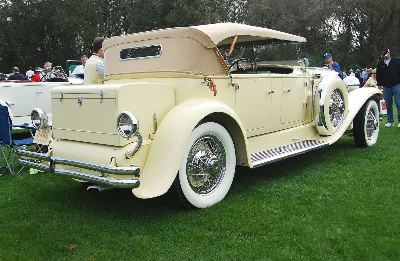
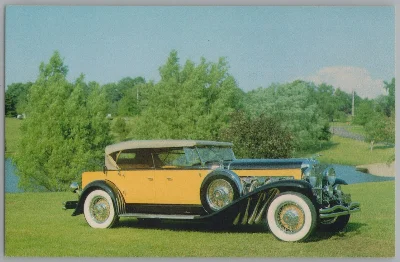
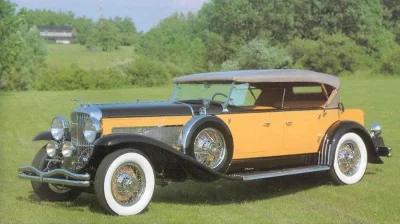
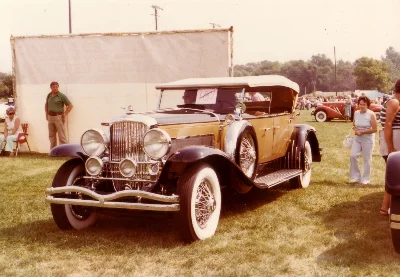
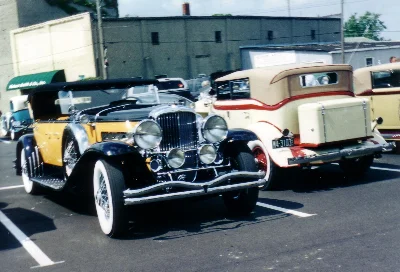
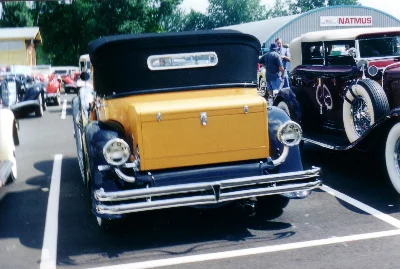
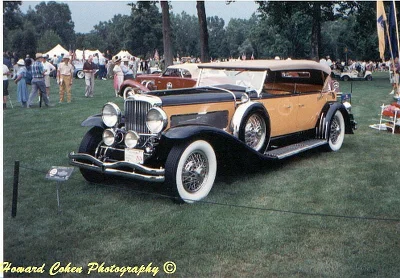
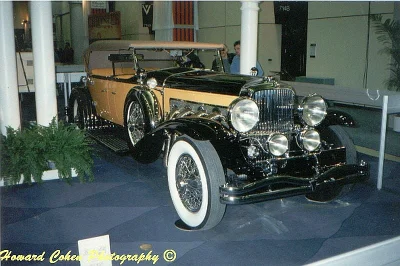
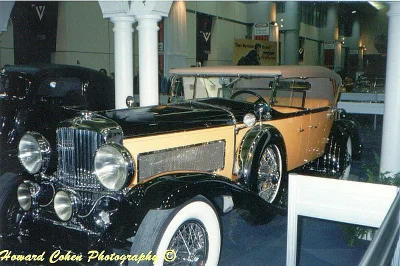
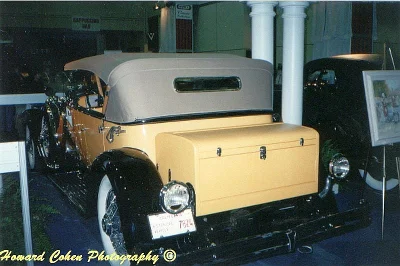
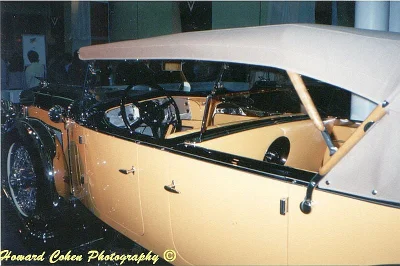
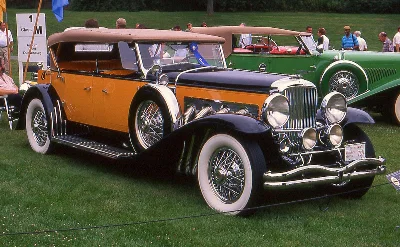
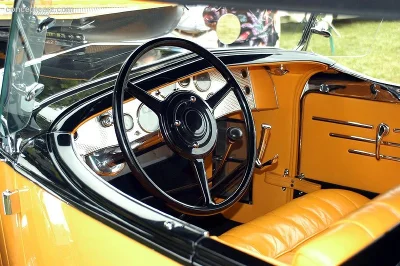
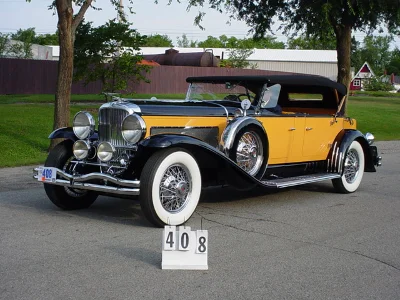
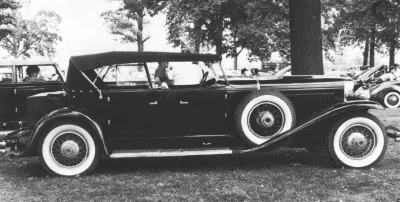
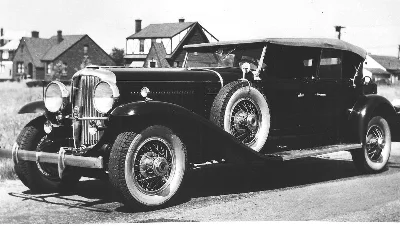
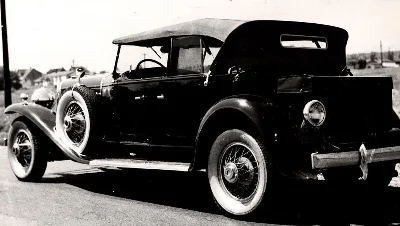
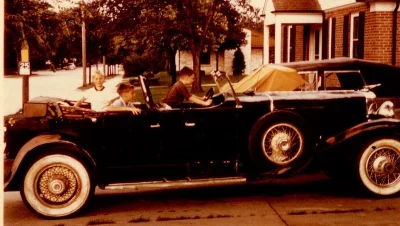
Duesenberg Model J chassis 2464, powered by engine J‑448, is one of the most important surviving Derham-bodied Duesenbergs and one of only eight authentic Derham Toursters ever built. Combining the grandeur of the long-wheelbase Model J chassis with remarkably sporting proportions, it is widely regarded as one of the finest expressions of Gordon Buehrig's design genius.
Among all the bodies he created for the Model J, the Tourster was reportedly Gordon Buehrig's personal favorite. In his autobiography Rolling Sculpture, Buehrig described the design as being "severely plain in its ornamentation" while possessing the rare virtue of looking equally handsome with the top either raised or lowered.
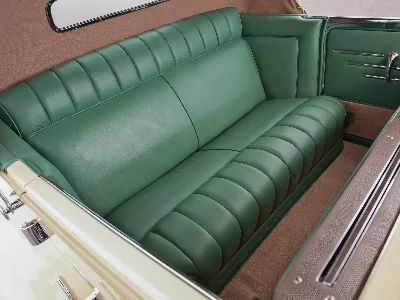
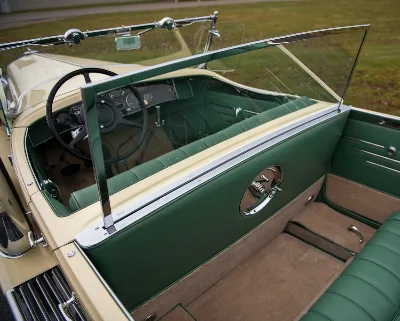
The Tourster's elegant proportions resulted from a highly innovative layout. Rather than placing the rear passengers over the rear axle as was customary, Buehrig moved the rear seating compartment forward and positioned the footwells between the frame rails. This arrangement allowed the body to sit significantly lower than a conventional phaeton while actually increasing passenger comfort and interior space. The result was one of the most graceful and streamlined open automobiles of the Classic Era.
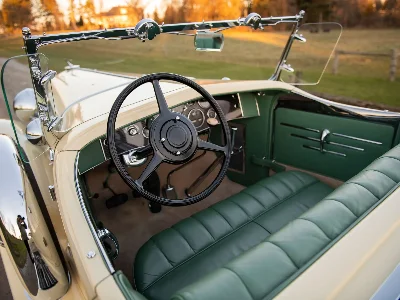
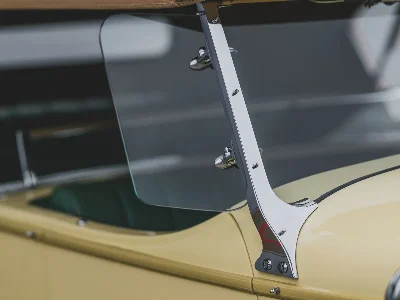
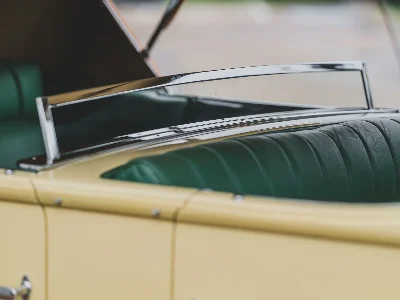
Buehrig also solved a practical problem common to dual-cowl phaetons. Most cars of the period used a second windshield mounted on a hinged tonneau panel that had to be awkwardly folded out of the way whenever rear passengers entered or exited the car. The Tourster employed a far more elegant solution: a crank-operated rear windshield that rose from and disappeared into the back of the front seat, providing excellent wind protection while remaining completely unobtrusive.
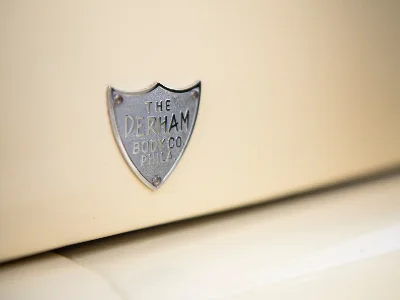
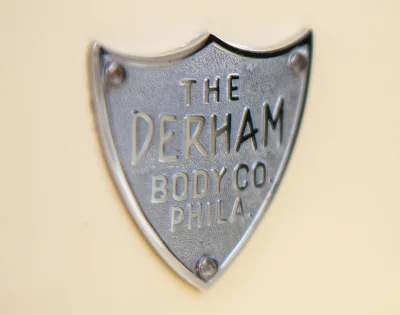
Built by the Derham Body Company of Rosemont, Pennsylvania, only eight original Toursters were constructed. Remarkably, all eight survive today.
Chassis 2464 carries body number 2324, identifying it as the fourth of the eight original Derham Toursters built.
Uniquely, it was delivered with a special factory-designed hood featuring eighteen vertical louvers, rather than the curved louvers found on nearly all other Model J Duesenbergs. This distinctive feature set the car apart even among the already rare Toursters.
The car was delivered through the Philadelphia factory branch on September 19, 1931, to William M. Odom, president of the Parsons School of Design and a noted authority on French and Italian decorative arts. Odom was a respected interior designer who maintained residences in both New York and Paris. In recognition of his contributions to the study and preservation of fine art, he had been named a Chevalier of the French Legion of Honour in 1928.
Odom retained the Tourster throughout the 1930s. While he reportedly offered it for sale through the well-known dealer J.S. Inskip at one point, the car remained in his possession until his death in 1942.
The following year, his estate sold the Duesenberg to Lester M. Bonham of Buffalo, New York, who kept it only briefly before transferring ownership to William A. Lester.
Lester later relocated to Southern California, bringing the car with him. During the following decades the Tourster passed through several caretakers before being acquired in 1960 by Dan Lang of Racine, Wisconsin, one of the pioneering figures in Duesenberg preservation. Lang retained the car for the remainder of his life.
Following Lang's death, the Tourster was purchased in 1973 by Dr. Irwin Ginsberg, a prominent collector best remembered for winning Best of Show at Pebble Beach with an Isotta Fraschini.
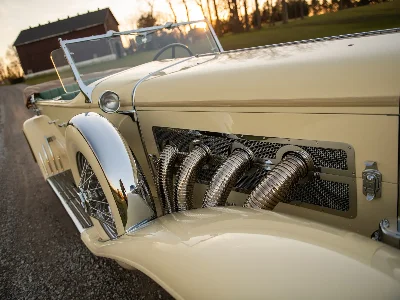
Ginsberg restored the car and fitted it with the dramatic side exhaust system often associated with supercharged SJ models. During his ownership the Tourster became a regular participant in concours events and collector gatherings.
In 1984, the car passed to respected collector John Mozart, followed by Clifford Heinz, heir to the Heinz food fortune. Heinz later sold the car to legendary racing entrepreneur and STP founder Andy Granatelli, whose ownership further enhanced the car's already impressive provenance.
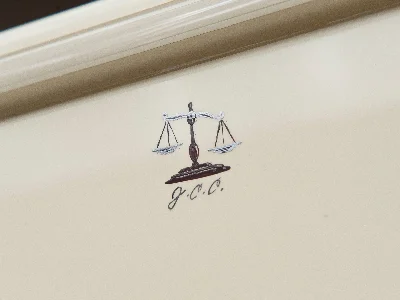
Granatelli retained the Tourster until 1996. It then passed to longtime Duesenberg enthusiast John Groendyke before being acquired in 2001 by renowned collectors Margie Cassini and Judge Joseph Cassini III of New Jersey.
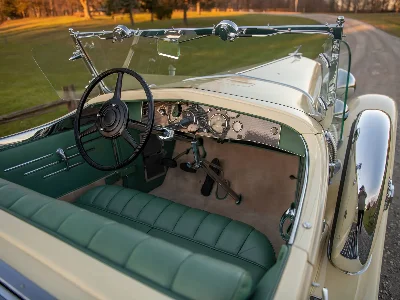
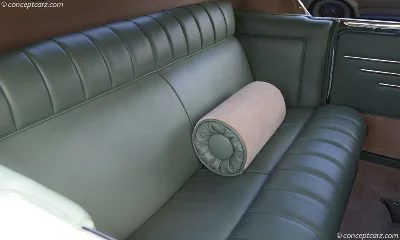
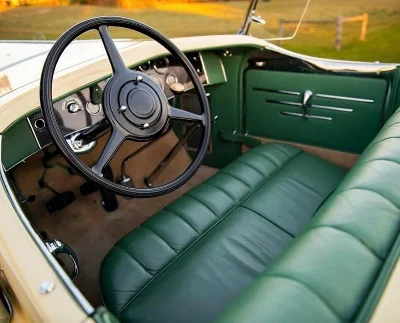
Recognizing the significance of the car, the Cassinis entrusted it to RM Auto Restoration for a comprehensive restoration. The car emerged in a stunning soft cream-yellow livery with green leather upholstery, a combination that beautifully emphasized the flowing lines of the Derham coachwork.
During the restoration, RM's craftsmen discovered that the Tourster retained:
- Its original body
- Original chassis
- Original firewall
- Original engine
- Original numbered crankshaft (448)
Most of the original wood framework and aluminum coachwork were found to be in excellent condition and were preserved, a testament to the quality of both Derham's craftsmanship and the care the car had received throughout its life.
Under the Cassinis' stewardship, 2464 became one of the most successful Duesenbergs of the modern concours era.
Its awards include:
- Best Duesenberg and Best of Show, Auburn Cord Duesenberg Club National Reunion (2011)
- Class Winner, Amelia Island Concours d'Elegance (2012)
- Class Winner, Pebble Beach Concours d'Elegance (2012)
- Best of Show Nominee, Pebble Beach Concours d'Elegance (2012)
- American Best of Show, Concours d'Elegance of America (2013)
- Best of Show, Stan Hywet Concours d'Elegance (2014)
The Tourster quickly earned a reputation as the car to beat wherever it appeared, becoming closely associated with the Cassinis, themselves among the most successful concours competitors of their generation.
After more than twenty years in the Cassini collection, the car was sold in 2022 to Ray and Bonnie Kinney. Acquired as both an exceptional touring Duesenberg and a birthday gift from Ray Kinney to himself, the Tourster continues to be actively enjoyed on the road and at shows. Under the Kinneys' stewardship, the car has continued to receive recognition, including honors at the 2025 San Marino Motor Classic.
Elegant, innovative, and extraordinarily well documented, Duesenberg 2464 stands among the finest surviving examples of the Model J. Its sophisticated Derham coachwork, complete originality, distinguished ownership history, and remarkable concours record make it one of the most important Toursters ever built.
More than ninety years after its delivery, 2464 remains a benchmark example of Gordon Buehrig's favorite Duesenberg design, an automobile that perfectly captures the blend of luxury, engineering excellence, and sporting elegance that defined the "World's Mightiest Motor Car."