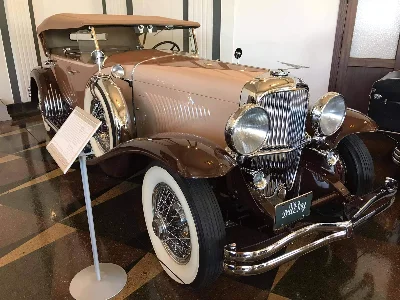
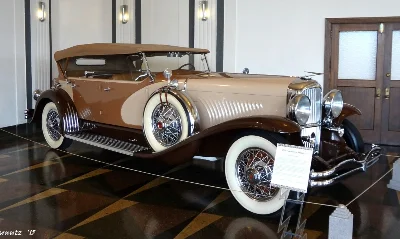
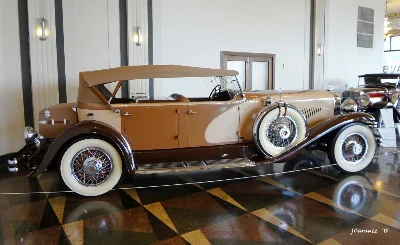
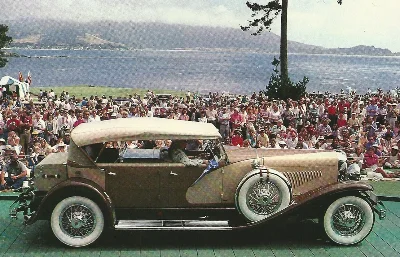
This 1934 Duesenberg Model J features a LaGrande Dual‑Cowl Phaeton body, one of the most admired open styles ever associated with the Model J. Although inspired by the acclaimed LeBaron Dual‑Cowl Phaeton, this design is not merely a copy. The body was reconstructed during restoration using the LeBaron style as a foundation, but with several distinctive refinements introduced by Duesenberg’s in‑house stylist, Gordon Buehrig.
LaGrande served as Duesenberg’s internal design studio, developing the brand’s official factory styles. Bodies were contracted out to specialist coachbuilders, while final paintwork and interior trimming were completed at the Duesenberg factory itself. Buehrig’s interpretation of the Dual‑Cowl Phaeton included meaningful proportional changes, most notably narrowing the rear body section. This revision allowed the convertible top, when folded down, to rest neatly and parallel to the beltline, improving both the appearance and practicality of the car.
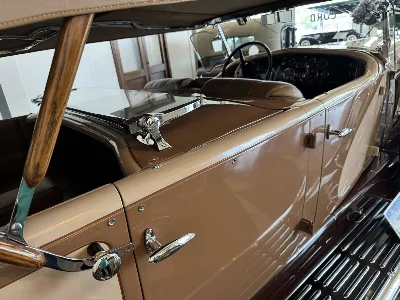
As with all true dual‑cowl phaetons, this example features two windshields, one mounted ahead of the driver and another set into the rear cowl for the back‑seat passengers. The rear windshield folds forward when needed, offering protection or open‑air freedom depending on the passengers’ preference.
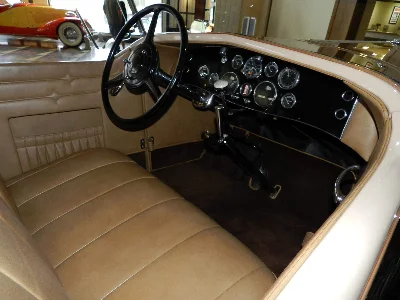
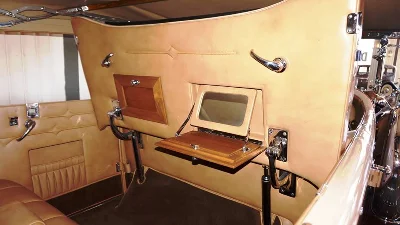
The exterior is finished in an elegant tan and brown two‑tone combination with sweeping accent lines at the base of the front doors. This design element, known as the “sweep panel,” is one of the most graceful stylistic flourishes used on open Duesenbergs. Inside, the phaeton carries tan pleated leather upholstery, matching interior door panels, and brown carpeting, all emphasizing luxury and craftsmanship.
When new, it carried a price tag of $14,750, placing it among the most expensive cars in the world.
This Dual‑Cowl Phaeton was donated by Guy E. Beatty, Jr. from his private collection to the ACD Museum.