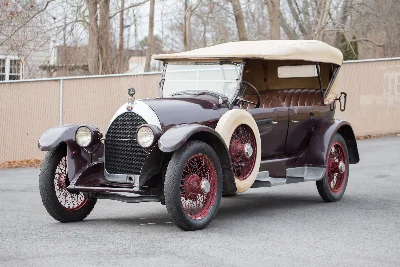
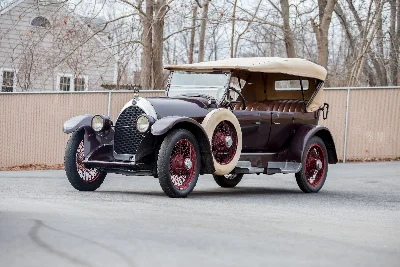
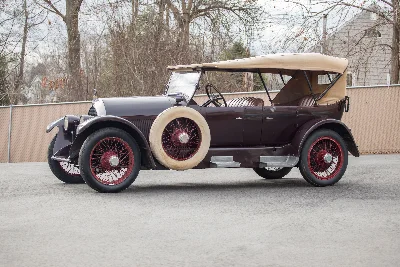
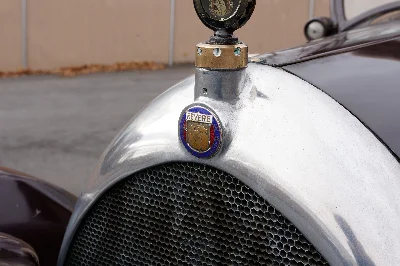
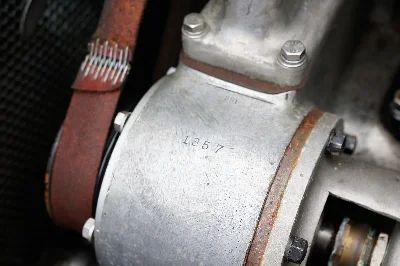
The 1920 ReVere-Duesenberg Four-Passenger Tourer is one of the most fascinating and rare American automobiles of its era. Built on chassis number 1357 and powered by the legendary Duesenberg “walking beam” four-cylinder engine, this car was among the most powerful and advanced road cars of its time. With 106 horsepower at 2,800 rpm from a 360 cubic inch engine, paired with a four-speed Browne-Lipe transmission and a lightweight aluminum body, the ReVere offered performance that few competitors could match in 1920.
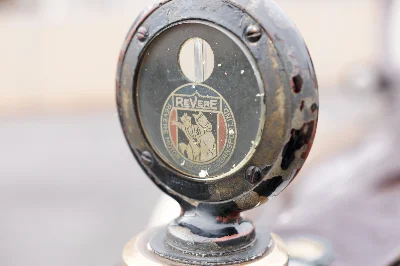
The ReVere name honored American patriot Paul Revere, but the company’s story is a mix of brilliance and scandal. Founded in Logansport, Indiana, ReVere was the vision of engineer Adolph Monsen, who aimed to create a road car with racing-level performance and refinement. Monsen collaborated with racing legends Gil Anderson and Tom Mooney to design a car that incorporated cutting-edge technology from the track. The chassis featured a double-drop frame and outboard-mounted semi-elliptic springs for improved handling. The gearbox was an aluminum-cased Browne-Lipe unit with four forward gears, and the tall rear axle ratio of 3.5:1 allowed effortless high-speed cruising. The car rode on Buffalo wire wheels and featured striking cycle fenders and step plates instead of running boards, giving it a sporty, lightweight appearance.
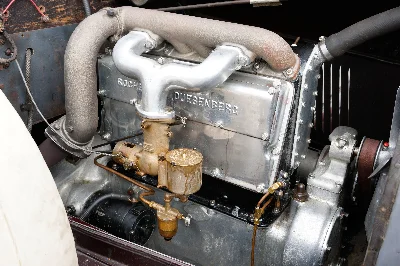
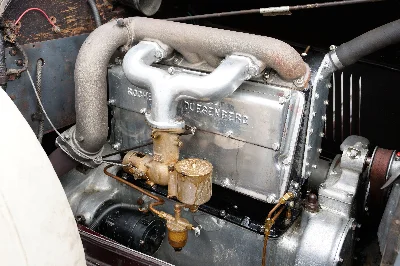
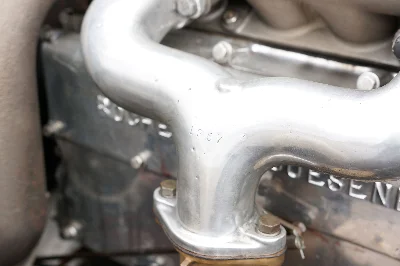
The centerpiece of the ReVere was its Duesenberg walking beam engine, a masterpiece of early performance engineering. Developed by the Duesenberg brothers in 1912, this engine set the standard for racing power through World War I. Its innovative design used long "walking beam" rockers to operate valves mounted perpendicular to the pistons, creating efficient combustion chambers and excellent airflow compared to the common T-head engines of the day. The monobloc design reduced weight, and the aluminum crankcase housed a crankshaft fed from the rear. Ignition was by Bosch magneto, and fuel delivery came from a massive Stromberg M-4 carburetor. The result was an engine that combined durability, efficiency, and raw power—perfect for a performance-oriented road car.
Despite its engineering brilliance, ReVere’s management was more interested in selling stock than building cars. The company became embroiled in financial improprieties, and production numbers remained extremely low. It is believed that only six ReVere-Duesenberg cars survive today, making them exceptionally rare.
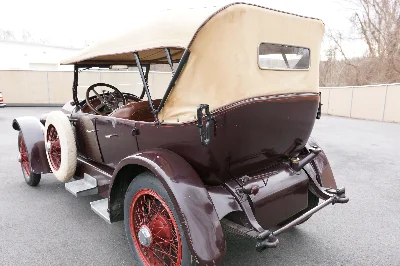
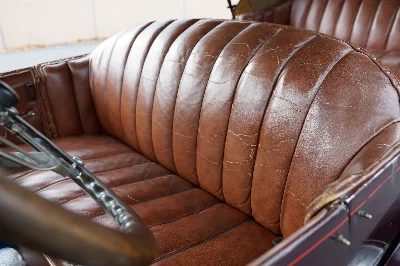
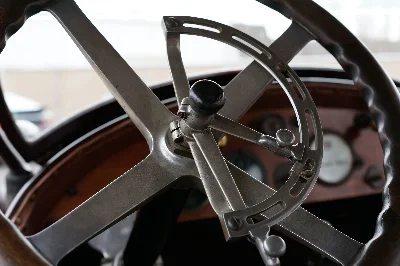
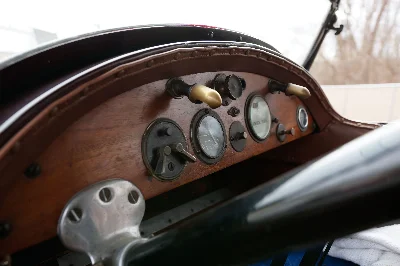
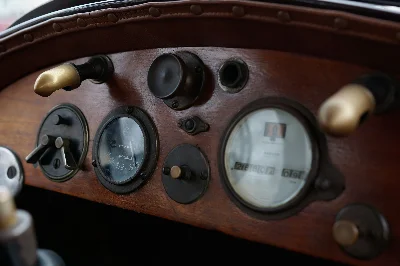
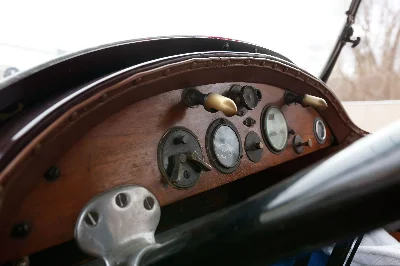
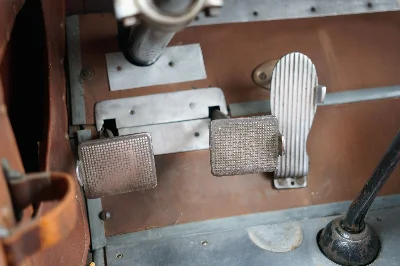
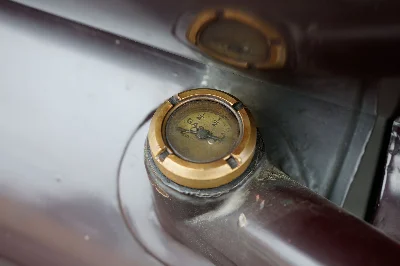
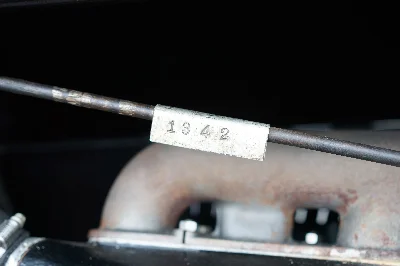
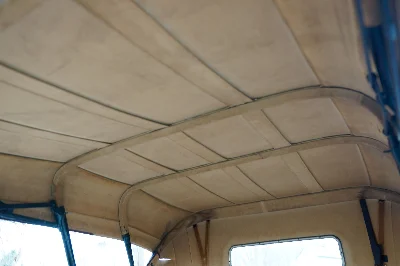
This example here is highly original and correct, having remained in the same family collection for decades. It retains its original dashboard, instruments, carburetor, and magneto. The car has never been fully restored, preserving its authentic patina, including the interior and top with side curtains.
ReVere-Duesenbergs are among the most charismatic and exciting American cars of the early 20th century. With their advanced engineering, lightweight construction, and racing pedigree, they offer a driving experience unlike any other car from 1920.